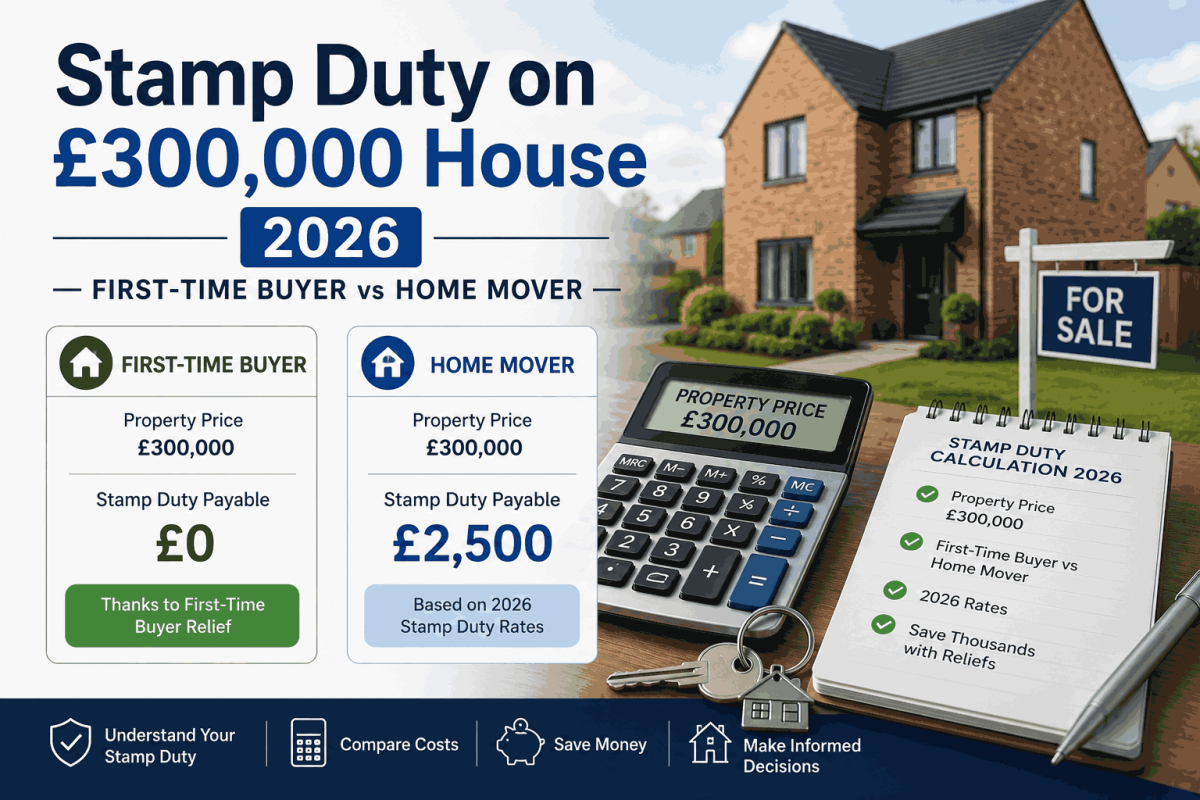
SDLT rates 2026 determine how much Stamp Duty Land Tax you pay when buying residential property in England and Northern Ireland. This complete guide explains stamp duty thresholds, standard tax bands, first-time buyer relief, second-home surcharges and how to calculate your SDLT bill .Stamp Duty Land Tax (SDLT) is a one-off tax on property purchases in England and Northern Ireland. On a standard home purchase you pay 0% on the first £125,000, 2% up to £250,000, 5% up to £925,000, 10% up to £1.5 million and 12% above that. The rate applies to each slice of the price, not the whole amount. On a £300,000 home that comes to £5,000.
What is SDLT?
Stamp Duty Land Tax is paid to HMRC when you buy a residential property or land above certain price thresholds. Your solicitor or conveyancer normally files the return and pays it on your behalf within 14 days of completion, so you need the money ready alongside your deposit.
SDLT applies only in England and Northern Ireland. Other parts of the UK have their own taxes:
• Wales: Land Transaction Tax (LTT).
• Scotland: Land and Buildings Transaction Tax (LBTT).
SDLT rates for 2026 (standard residential purchases)
These rates apply if you are buying a home and will not own another property afterwards.
Property price band | SDLT rate |
Up to £125,000 | 0% |
£125,001 to £250,000 | 2% |
£250,001 to £925,000 | 5% |
£925,001 to £1.5 million | 10% |
Over £1.5 million | 12% |
The nil-rate band was temporarily £250,000 until 31 March 2025 and returned to £125,000 on 1 April 2025. Anyone still using older figures will overestimate their saving.
How SDLT is calculated: worked examples
SDLT is marginal, like income tax. Each rate applies only to the part of the price inside that band.
Example 1: £300,000 home
• First £125,000 at 0% = £0
• Next £125,000 at 2% = £2,500
• Remaining £50,000 at 5% = £2,500
• Total: £5,000
Example 2: £500,000 home
• First £125,000 at 0% = £0
• Next £125,000 at 2% = £2,500
• Remaining £250,000 at 5% = £12,500
• Total: £15,000
Example 3: £925,000 home
• £0 + £2,500 + (£675,000 at 5% = £33,750)
• Total: £36,250
First-time buyer relief
If you and everyone you are buying with are first-time buyers, you pay:
• 0% on the first £300,000
• 5% on the portion from £300,001 to £500,000
The cliff edge: if the price is over £500,000, first-time buyer relief is not available at all, and standard rates apply to the whole purchase.
Example: a first-time buyer purchasing at £400,000 pays 5% on £100,000, which is £5,000. A home mover pays £10,000 on the same property.
Second homes and buy-to-lets: the 5% surcharge
If you will own more than one residential property after the purchase, you pay a 5% surcharge on top of every band. This covers buy-to-let investors and holiday homes. The surcharge rose from 3% to 5% on 31 October 2024, and it overrides first-time buyer relief.
Example: buying a £300,000 additional property
• Standard SDLT: £5,000
• 5% surcharge on the full price: £15,000
• Total: £20,000
Replacing your main residence usually is not treated as an additional property, but timing rules apply if you have not sold your old home by completion. You may be able to reclaim the surcharge if you sell within three years. Ask your conveyancer about your situation.
Non-UK resident surcharge
Buyers who are not UK-resident for SDLT purposes pay an extra 2% on top of all other rates. Residency is judged by a 183-day test in the 12 months before purchase, not by nationality or visa status.
What affects your SDLT bill?
1. Purchase price (chargeable consideration): this can include more than the headline price, such as certain fixtures or assumed debts.
2. Whether you own other property: this triggers the surcharge.
3. First-time buyer status: every buyer on the deal must qualify.
4. Residency status: the 2% non-resident surcharge.
5. Property type: non-residential and mixed-use property has lower rates.
6. Leasehold details: premiums and sometimes rent can attract SDLT.
Ways to reduce what you pay

• Check eligibility for first-time buyer relief before you offer. The £500,000 cliff makes a big difference near the limit.
• Negotiate price around thresholds. Dropping from £500,100 to £500,000 can save a first-time buyer thousands.
• Do not try to artificially lower the price. Misdeclaring the price or fixtures to HMRC is an offence. Legitimate separate purchases of genuinely separate items are different, so take advice.
• Budget for it early. SDLT is paid at completion, and most lenders do not let you add it to your mortgage.
Frequently asked questions
What is the SDLT threshold in 2026?
The standard nil-rate threshold is £125,000 for most buyers and £300,000 for eligible first-time buyers.
Do I pay stamp duty on the whole price?
No. Each rate applies only to the slice of the price within its band.
Is stamp duty the same in Wales and Scotland?
No. Wales charges Land Transaction Tax and Scotland charges Land and Buildings Transaction Tax. Each has its own rates and thresholds.
Who pays SDLT, the buyer or the seller?
The buyer pays. It is due within 14 days of completion, and your solicitor usually handles it.
Can I add SDLT to my mortgage?
Generally no. Lenders expect it to come from your own funds, along with your deposit.
Is SDLT charged on a second home?
Yes, with an extra 5% on every band.
How accurate is an online SDLT calculator?
Calculators are accurate if the rates are current and your answers are correct. Edge cases, such as shared ownership, mixed-use property and linked transactions, need professional advice.
Related guides and tools
• Stamp duty calculator (tool page)
• Mortgage repayment calculator
• Take-home pay calculator
• Mortgage overpayment calculator (new page to create)
• Stamp duty calculator Wales (new page to create)